
Returning to Play
Is Not Clearance
Strength can return before trust does. Clearance restores capacity – not always viability.
COD LAB exists to reveal whether hesitation is actually gone. This is where return-to-play moves from metrics to movement.
Logic Node 01
|
Isolated Control |
Pass |
|
Symmetry Targets |
Pass |
|
High Speed Redirection |
Fail |
Breakdown occurs where movement stays permissive rather than responsive.
Why Return-to-Play
Often Fails
Modern rehab restores strength, symmetry, and confidence in isolated tasks. Athletes pass tests. They return to training. Then something still feels off.
When speed meets curvature, fatigue, and late decisions — hesitation appears. This is not weakness. It is a system protecting itself when organisation arrives late.
Clearance Is Not the Same as Viability
Question A
clearance
“Can the athlete produce force?”
Relates to capacity. Muscle volume, peak torque, rate of force development. The hardware check.
Question B
Viability
“Can the athlete redirect force while already committed?”
Relates to organization. Viability means movement stays organised when speed cannot be reset. That distinction decides whether return-to-play actually holds.
Enhanching Clinical Judgement
What Cod Lab Adds
Our technology doesn’t replace the expert clinician. It empowers them with objective, high-frequency data where traditional benchmarks fall short.
Clinical Judgement
The human element is irreplaceable. We add clarity to your intuition.
Strength Benchmarks
Limb symmetry indices are only half the story. We provide the rest.
Hop Tests
Distance doesn’t define quality. We capture the strategy behind the hop.
Return-to-Run
Beyond the stopwatch. We monitor mechanical efficiency in real-time.
The CodLab Advantage
Preserved momentum inside finite geometry, with consequence that is informative – not catastrophic.
This allows readiness to be observed, not assumed. We bridge the gap between the gym and the chaotic reality of sport.
What Becomes Visible
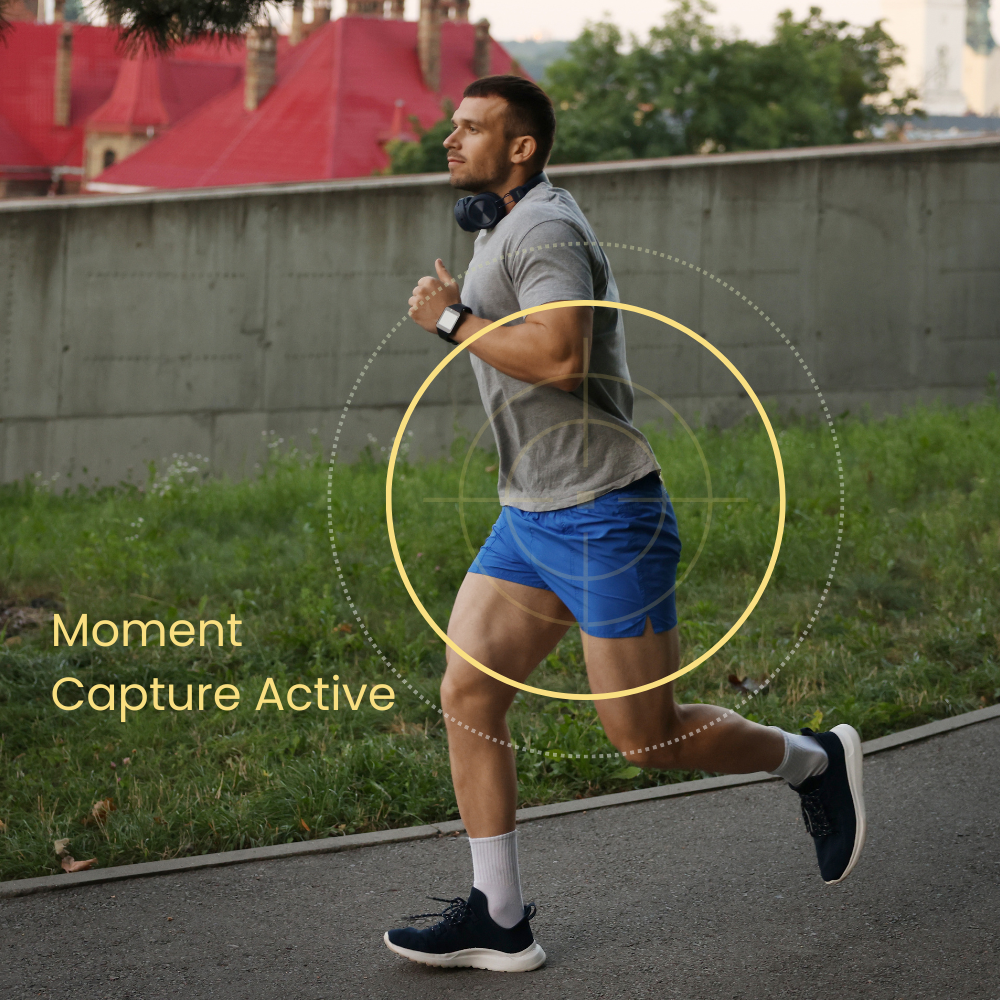
The diagnostic power of constrained movement. When we preserve momentum within a fixed geometry, the “leaks” in a system have nowhere to hide. These five indicators represent the transition from efficient flow to compensatory survival.
These behaviours often pass unnoticed in permissive environments. They are obvious when momentum is preserved.
Why This Is Safe
COD LAB environments are designed so poor solutions fail quietly. Failure does not mean injury; it means inefficiency.
Heavier
Movement
System working harder than necessary. Mechanical disadvantage prioritized over metabolic cost. We identify the moment output exceeds optimal efficiency before the tissue reaches failure.
Degraded
Rhythm
Internal organization breaking down. Timing deltas increasing between integrated systems. The rhythmic signature reveals the onset of fatigue before it manifests as physical pain.
Slower Exits
The price paid for lack of trust. Transitional efficiency sacrificed for perceived security. We measure the hesitation that precedes the movement, building confidence through repeatable safety.
Errors create cost – not danger. This allows honest exposure without fear-based restriction.
Safety Profile: Passive Fallback
What Success Looks Like in Rehab
You are not looking for speed. You are looking for the signatures.
Calm entry into constraint
Earlier organisation
Fewer rescue steps
Quieter contacts
Exits that retain speed
Consistency under light fatigue
Who This Is For
This system does not replace strength or speed work. It connects them to the game.
This is infrastructure for decision-making – not a shortcut.
What This Page Is and Isn’t
COD LAB is a movement exposure environment designed to support observation and decision-making. All return-to-play decisions remain the responsibility of the treating professional. We provide the exposure; you provide the judgement.
Negative Scope: